
Leadership Is Not About Solving Problems. It's About Managing Tension
The Decision That Had No Perfect Answer
David Lawson stared at two reports spread across his desk. Both were important. Both were urgent. And both pointed in completely different directions.
As CEO of a fast-growing technology company, David faced a challenge that resonates with leaders everywhere: the fundamental paradox of modern leadership under pressure.
The business needed to move faster. But quality standards couldn't slip.
Investors demanded growth. Employees demanded balance.
Customers wanted innovation. Operations required stability.
Every option created advantages. Every option created risks.
For several days, David searched for the perfect answer—a solution that would somehow maximize growth while minimizing risk, increase speed without sacrificing quality, improve performance without increasing pressure.
Eventually, he realized something that transformed his entire understanding of leadership: there wasn't one.
This realization became the foundation for everything that followed. It shifted him from searching for impossible certainties to developing the sophisticated interpersonal communication and emotional intelligence in leadership required to navigate genuine complexity.
The Leadership Myth That Creates Frustration
Many leaders are taught that their primary role is problem-solving.
Identify the issue. Find the solution. Implement the fix. Move on.
That approach works brilliantly for technical challenges. Leadership decisions operate by entirely different rules.
The most significant leadership decisions rarely involve choosing between right and wrong. They involve managing organizational tension between competing, legitimate priorities:
Speed versus quality
Growth versus sustainability
Performance versus wellbeing
Innovation versus consistency
Ambition versus realistic capacity
Traditional leadership pressure management assumes you can eliminate these tensions. Modern reality proves otherwise.
The challenge is not solving the tension. The challenge is managing it.

This fundamental misunderstanding creates enormous frustration. Leaders exhaust themselves searching for solutions that would eliminate all competing demands. They pursue impossible balance. They chase perfection. And they burn out trying to satisfy incompatible expectations.
Understanding this distinction transforms how leaders approach their role. It's the difference between decisions under pressure that paralyze and high-pressure leadership that excels.
Why Leadership Feels More Difficult Today
Modern organisations operate in environments of relentless uncertainty. Markets shift within months. Technology evolves continuously. Customer expectations change overnight. Organizational culture demands transformation constantly.
As complexity increases exponentially, leadership becomes less about certainty and more about sophisticated judgment. Executive decision making under pressure requires frameworks that embrace ambiguity rather than eliminate it.
The strongest leaders recognize something crucial: many tensions never disappear. They simply require ongoing navigation. Attempting to eliminate them creates bigger problems than managing them thoughtfully.
This is where leadership strategies for organizational change differ most from traditional management. Leadership during organizational change isn't about reaching a perfect end state—it's about skilfully navigating the inherent tensions of transformation while maintaining leadership and team alignment.
Critical thinking under pressure becomes less about having perfect data and more about making informed judgments with incomplete information. This requires both intellectual rigor and emotional intelligence—the intersection of a rational decision-making approach and emotional intelligence in leadership.
Next Dimension Story’s approach to leadership decision-making combines your rational decision making and emotional intelligence to make sound decisions – it is called the Next Dimension Story Heart-Mind-Intuition System to make sound decisions, especially during high-pressure situations. When you are under pressure, you have to connect your heart (culture and values), mind (logic and skill sets), and intuition (experience and lessons learnt), to make decisions that benefit your team and your company – you get to navigate the tension of transformation whilst maintaining leadership and alignment.

Try out our Next Dimension Story Smart Decision-Making video course and learn the frameworks for Effective Leadership Decision- Making.
The Trap of False Certainty
Several months after his difficult decision, David reflected on what had made the situation so stressful.
It wasn't the tension itself.
It was his desire to eliminate it.
He wanted a solution that would satisfy every stakeholder. He wanted to make the "right" choice—the one that wouldn't disappoint investors, employees, customers, or operations teams. He pursued what organizational theorists call "false certainty"—the illusion that perfect information or deeper analysis would reveal an optimal path that satisfied all competing demands.
The reality proved different. Every leadership decision creates trade-offs. Every choice carries consequences alongside benefits.
The moment David accepted this truth, decision-making under pressure transformed. Not because the decisions became easier—they didn't. But they became clearer. More thoughtful. Less paralyzed by the search for impossible perfection.
This is what separates leaders who command a room with authentic confidence from those who project false certainty. True commanding presence in communication comes not from knowing all answers but from honest navigation of genuine complexity.
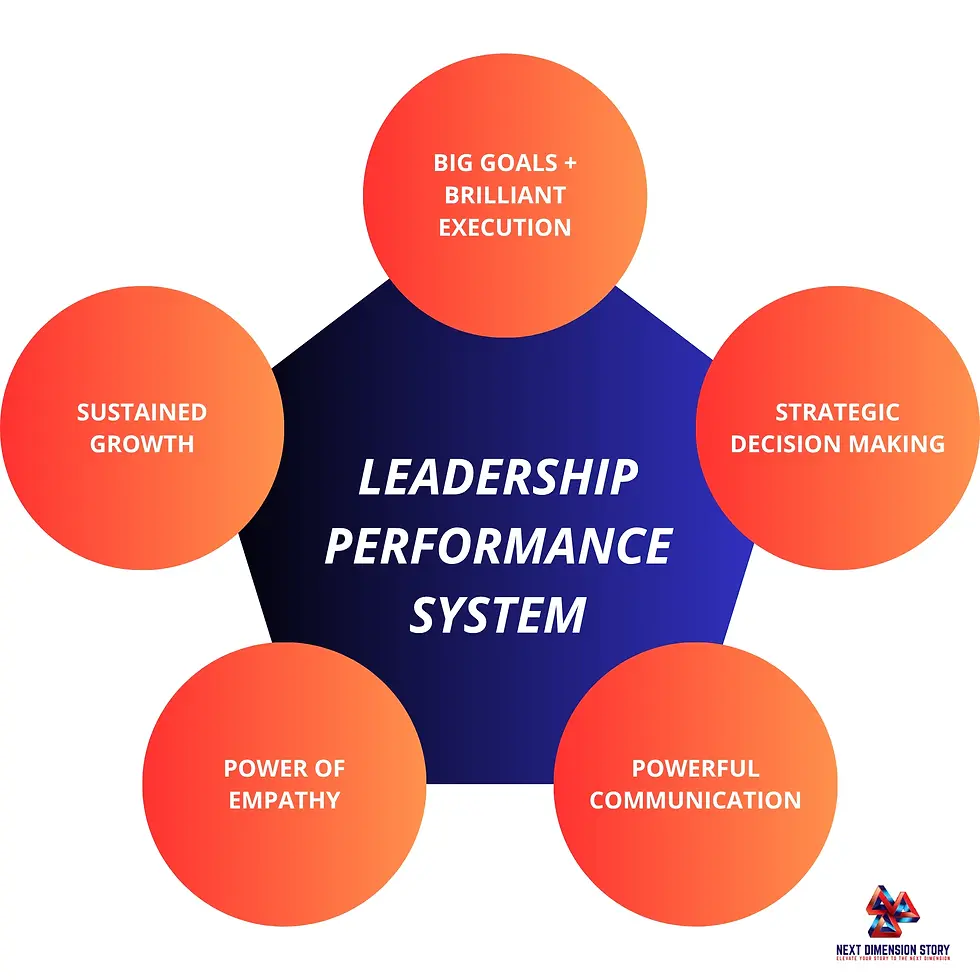
Leaders who go through the Next Dimension Story Effective Leadership Performance System understand the need to command a room and effectively navigate genuine complexity. This is where emotional intelligence skills and communication skills are crucial to successfully manage the tension with high-pressure decision-making.
The Effective Leadership Performance System enables our leaders to be effectively consistent in tension management. Review our Effective Leadership Audio Course today and start your journey today. Once you get the audio course, commit to spending 15 minutes a day for a week and you will be equipped with core skills to communicate with courage, conviction, and authenticity.
What High-Performing Leaders Do Differently
Exceptional leaders approach leadership, organisational culture and navigating organizational conflict with fundamentally different frameworks than traditional managers.
Instead of asking: "How do I eliminate this problem?"
They ask: "How do I manage these competing priorities effectively?"
This shift changes everything about how leaders think, decide, and communicate.
It encourages strategic thinking rather than tactical scrambling. It reduces perfectionism that paralyzes. It improves actual decision quality rather than chasing theoretical perfection. Most importantly, it creates organizational agility—the capacity to navigate constant change without losing coherence.
This requires mastery of effective communication and interpersonal skills at the highest level. Leaders must communicate interpersonally with diverse stakeholders—each with legitimate but conflicting priorities. They must develop excellent communication and interpersonal skills that allow them to articulate difficult trade-offs without losing trust or alignment.
The difference between communication and interpersonal skills becomes particularly clear during high-stakes decisions. Leaders can't simply announce choices—they must help stakeholders understand the reasoning, accept the trade-offs, and commit despite incomplete satisfaction.
Leadership Under Pressure: The Confidence to Lead Through Ambiguity
One of the most misunderstood leadership skills is confidence itself.
Many people assume confidence means certainty. In reality, authentic confidence often means acting decisively despite uncertainty.
The strongest leaders rarely possess complete information. They rarely have guarantees. Rarely find perfect solutions. What they do possess is the ability to make thoughtful decisions under pressure while accepting genuine ambiguity.
This is what separates leadership from management.
Managers optimize systems. They improve processes. They reduce variability within established frameworks. That work is valuable.
Leaders navigate uncertainty. They make high-stakes decision-making calls with incomplete data. They command the room through authentic presence rather than false certainty. They help organizations move forward despite ambiguous conditions.
Consider how impactful storytelling becomes critical here. Leaders who can communicate about complexity and competing priorities through narrative—through authentic stories about tension, trade-offs, and tough choices—build far greater trust than those who pretend perfect answers exist.
Storytelling coaching increasingly focuses on helping leaders command a room by sharing authentic narratives about navigating tension. This is far more powerful than traditional public speaking training focused on projection and polish.

The Role of Interpersonal Excellence During Organizational Tension
Managing competing priorities requires sophisticated interpersonal communication effectiveness at every level.
When strong communication and interpersonal skills meet genuine complexity, leaders can navigate organizational conflict without creating cynicism or disengagement. They can make difficult choices while maintaining trust and psychological safety.
This requires understanding communication vs interpersonal skills distinctions:
Communication skills involve clarity, precision, and message delivery
Interpersonal skills involve understanding, empathy, and relationship navigation
Both matter during leadership under pressure. Leaders must communicate difficult trade-offs clearly while maintaining a genuine human connection through interpersonal presence.
The benefits of interpersonal communication become particularly visible when leaders face high-pressure leadership situations. Teams that trust their leader's effective interpersonal communication remain aligned even when decisions disappoint them. Teams without that trust fragment.
This is why emotional intelligence in leadership has become fundamental. It's the capacity to understand and navigate emotions—both your own and others'—while making critical thinking under pressure decisions that inherently create tension.
Storytelling and Authenticity: How Leaders Communicate About Tension
David's transformation accelerated when he discovered how powerful storytelling could help his team understand difficult decisions.
Rather than presenting decisions as inevitable conclusions, he began sharing authentic narratives about the thinking behind them. He acknowledged the interpersonal skills required to balance competing demands. He demonstrated command of the room presence not through false confidence but through honest vulnerability about the complexity he navigated.
This approach to storytelling for business proved far more effective than traditional "here's the decision, here's why you should support it" communications.
Storytelling coaching teaches leaders that powerful storytelling isn't manipulation—it's authentic connection through vulnerability. Influential storytelling about tension and trade-offs builds far deeper alignment than polished presentations of false certainty.
The power of storytelling in leadership and team alignment lies in its capacity to help people understand not just what leaders decide, but how leaders think about complexity.
Organizations implementing storytelling coaching for startups or established enterprises discover that leaders who master business storytelling navigate leadership strategies for organizational change far more effectively. Teams follow leaders who authentically communicate interpersonally about challenges more readily than those projecting false certainty.
Try the Next Dimension Story Effective Leadership Communication Video Course today and apply the fundamentals of storytelling communication in leadership to lead in the midst of complexity. With a 14-day money back guarantee, you can be confident in our promise to equip you to be a powerful storyteller and communicator who can lead effectively under pressure.
Creating Culture That Embraces Complexity
The most sophisticated leadership in organizational culture creates environments where team members understand that navigating organizational conflict is normal, not evidence of failure.
How leadership shapes organizational culture matters enormously here. Leaders who help teams understand that organizational tension is inherent to growth create cultures of resilience rather than fragility.
This requires effective communication and interpersonal skills that help people distinguish between:
Tensions that must be managed (growth, ambition, values alignment)
Problems that can be solved (technical challenges, process inefficiencies)
Conflicts that require resolution (interpersonal breakdown, values misalignment)
Leaders who command a room with authentic presence during complexity don't project false certainty. They demonstrate confidence through honest navigation. They use powerful storytelling about their own struggles with competing demands. They build trust through effective interpersonal communication rather than pretending tension doesn't exist.
The Leadership Skills Required for Modern Complexity
Success in today's environment requires leadership capabilities that traditional training rarely develops:
Decision Making Under Pressure
Making high-stakes decisions with incomplete information
Understanding the rational decision-making approach versus decision paralysis
Acting despite ambiguity while remaining thoughtful
Interpersonal Mastery
Strong communication and interpersonal skills that maintain alignment during disagreement
Effective interpersonal communication that helps people accept difficult trade-offs
Communicate interpersonally with authenticity about complexity
Emotional Intelligence
Emotional intelligence in leadership that helps you manage your own stress while supporting others
Understanding how your leadership pressure responses influence organizational culture
Building psychological safety while navigating genuine uncertainty
Authentic Presence
The ability to command the room through genuine confidence rather than false certainty
Using powerful storytelling to help people understand complex decisions
Commanding presence in communication that comes from honest vulnerability
Organizational Leadership
Understanding how leadership shapes organizational culture toward resilience
Leadership strategies for organizational change that manage rather than eliminate tension
Leadership during organizational change that maintains alignment despite difficulty
The Future Belongs to Tension Navigators
Today's leaders face challenges that previous generations could scarcely imagine. Complexity is increasing exponentially. Change is accelerating relentlessly. Competing priorities are becoming more intense and legitimate.
The leaders who thrive will not be those searching for perfect answers. They will be those who develop the rationality in decision making, emotional intelligence in leadership, and resilience required to balance competing demands.
They'll be leaders who command a room through authentic presence. Who use powerful storytelling to help people understand difficult choices. Who practice effective communication and interpersonal skills that build trust even when decisions disappoint.
Because leadership is not the art of solving every problem.
Leadership is the discipline of managing tension without losing clarity.
And in a world where certainty is becoming increasingly rare, that may be the most valuable leadership skill of all.


Comments